Blog
What Are the Carotid Arteries?
Published on 4 March 2023 · Updated on 4 October 2026 · Dr. Medical Clinic & Lab

The carotid arteries are the two main arteries that supply the brain with blood. They run along both sides of the neck – one on the left, one on the right – and you can easily feel their pulse just below the jaw. When they become narrowed, the risk of stroke rises, so it’s worth knowing how they work and how to protect them.
What do the carotid arteries do?
In the neck, each carotid artery divides into two branches: the internal carotid, which carries blood to the brain and eyes, and the external carotid, which supplies the face, scalp and neck. The brain needs a constant supply of oxygen, so even a brief interruption in blood flow can cause symptoms.
Carotid narrowing (stenosis)
Like all arteries in the body, the carotid arteries can be affected by atherosclerosis: the buildup of plaque made of fat, cholesterol, calcium and other substances circulating in the blood. Plaque gradually narrows the vessel. Fragments of plaque, or blood clots that form on it, can break off and block a smaller vessel in the brain, causing a stroke or a transient ischaemic attack (a “mini-stroke”).
This plaque is the same as the plaque that forms in the coronary arteries and causes heart attacks. That is why people with coronary artery disease are more likely than others to have plaque in their carotids too.
Risk factors
- regular smoking
- high blood pressure
- diabetes
- high blood fats (cholesterol)
- older age
- obesity or excess weight and lack of physical activity
- family history (heredity)
Symptoms
Carotid narrowing usually causes no symptoms at all until a transient ischaemic attack or a stroke occurs. The warning signs are:
- sudden weakness or numbness of the face, arm or leg, usually on one side of the body
- sudden difficulty speaking or understanding
- sudden loss or dimming of vision in one eye
- severe dizziness or loss of balance
Even if these symptoms last only a few minutes and go away on their own, call the emergency number 127 straight away. A mini-stroke is a serious warning, and prompt treatment can prevent a major stroke.
How it is diagnosed
During a cardiology consultation, the doctor may hear an abnormal sound over the carotid artery with a stethoscope – a possible sign of narrowing. The main tests are:
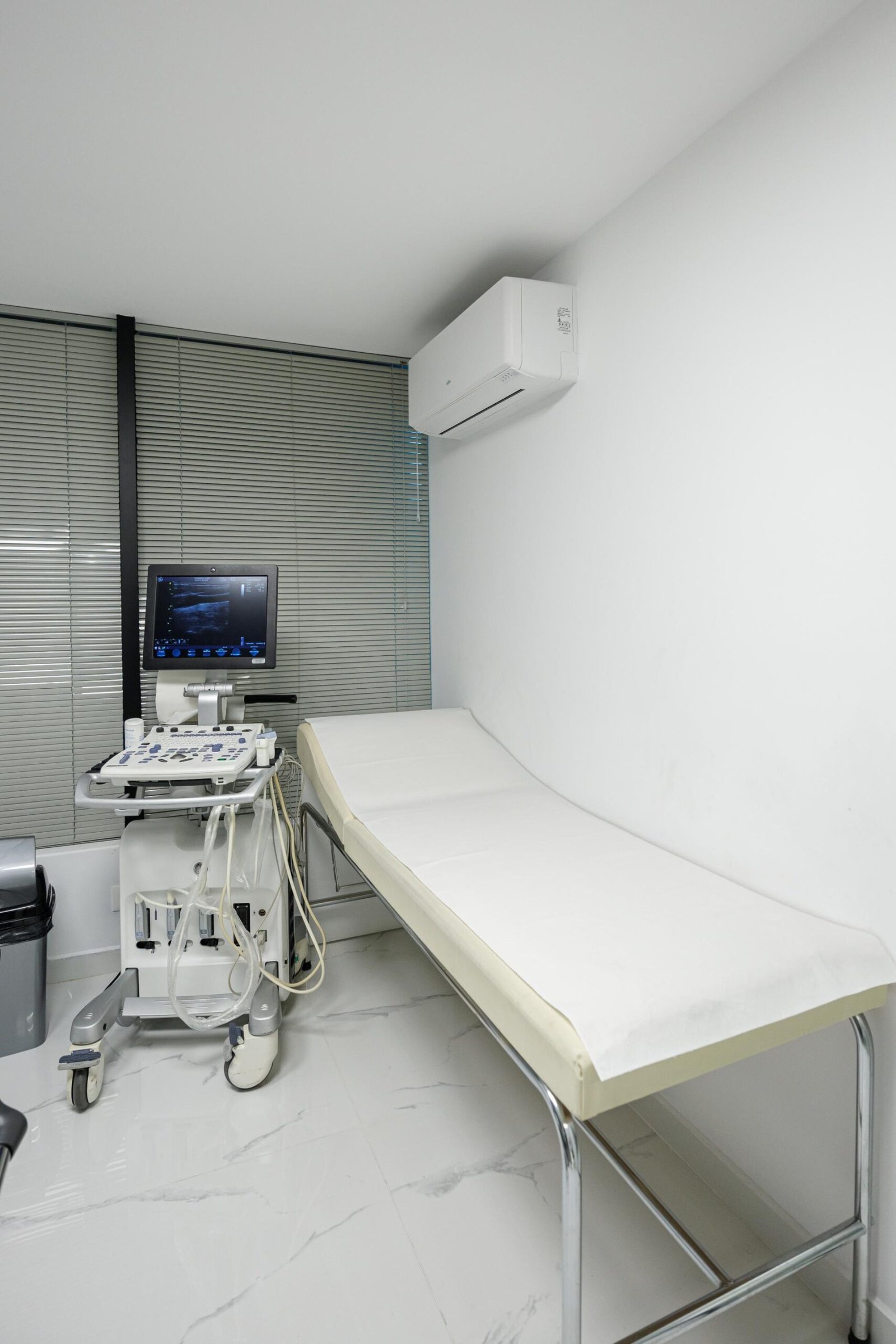
- Carotid Doppler ultrasound – a painless, radiation-free ultrasound scan that shows plaque, the degree of narrowing and the speed of blood flow.
- Laboratory tests – cholesterol, blood sugar and other values to assess your risk factors.
- CT or MRI angiography – when more detailed images are needed, usually before a procedure. These are done in hospital or at imaging centres; at the clinic we offer CT/MRI interpretation.
Treatment
Early diagnosis and treatment of a narrowed carotid artery can lower the risk of stroke. Treatment depends on how severe the narrowing is and whether you have had symptoms:
- Lifestyle – stopping smoking, regular physical activity, a healthy diet and weight control.
- Medication – to control blood pressure, cholesterol and diabetes, plus medicines that help prevent clots, as decided by your doctor.
- Procedures – for severe narrowing, especially after symptoms, surgical removal of the plaque (endarterectomy) or a stent may be needed. These are done in hospital.
When should you have your carotid arteries checked?
Book a consultation if you have several risk factors, such as smoking, high blood pressure, diabetes or high cholesterol, if you have coronary artery disease or narrowed leg arteries, or if a doctor has heard a sound over your neck arteries. At Dr. Medical Clinic & Lab, our staff carry out the cardiology consultation, carotid Doppler ultrasound and laboratory tests in the same clinic.
Our cardiology clinic in Tirana · Cardiologist in Tirana
This article is for information only and does not replace a consultation with a doctor.
Book a consultation
Call us or message us to book your consultation at a time that suits you.
Recent posts
Cardiac check-up for athletes: when and why
Who should have a heart check before sport, what it includes and…
Heart valve disease: stenosis and regurgitation
How valve stenosis differs from regurgitation, the main causes and symptoms, and…
Chest pain: when is it your heart?
Chest pain does not always come from the heart. Learn the warning…
Blog
Read also

Cardiac check-up for athletes: when and why
Who should have a heart check before sport, what it includes and which signs during exertion should never
Heart valve disease: stenosis and regurgitation
How valve stenosis differs from regurgitation, the main causes and symptoms, and why an echocardiogram is the key
Chest pain: when is it your heart?
Chest pain does not always come from the heart. Learn the warning signs, other causes and how a
Have questions about your health?
Book a consultation with our doctors.